Towing Capcity Ratings Explained
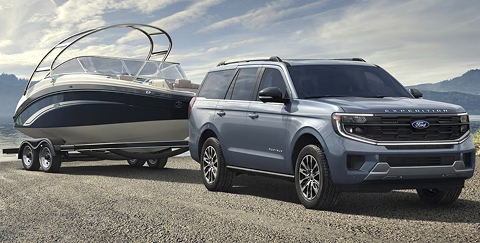
If you've researched trucks or SUVs for towing, you've probably wondered what towing capacity actually means and how manufacturers arrive at those numbers. At Chalmers Ford, we've been helping Rio Rancho and Albuquerque area drivers understand vehicle capabilities since 1996, and one of the most common questions we hear is about towing ratings.
Here's the straightforward answer: towing capacity is a manufacturer-tested maximum based on a specific vehicle setup and standardized test conditions. It's not a universal rating that applies to every trim level. A base model F-150 and a fully equipped F-150 with a factory tow package can have dramatically different towing capacities, even though they share the same name.
Understanding how these ratings work helps you make smarter decisions about which vehicle configuration you need, whether you're hauling a boat to Cochiti Lake or pulling a travel trailer to New Mexico's state parks.
What Towing Capacity Actually Means
Towing capacity is the maximum trailer weight your vehicle can safely pull when properly equipped. This figure assumes your truck or SUV is carrying only the driver with no additional cargo or passengers. Once you add your family, gear, and the trailer's tongue weight, the math changes significantly.
The rating isn't just about raw engine power. It reflects how every component works together under load, from the braking system's ability to stop both vehicle and trailer to the cooling system's capacity to manage increased heat. When Ford publishes a maximum tow rating, they're certifying that specific configuration passed rigorous testing under controlled conditions.
Two trucks sitting side by side on our lot might look identical but have towing capacities that differ by thousands of pounds based on their engines, axle ratios, and factory-installed equipment.
To explore our current inventory of properly configured Ford trucks and SUVs with various towing capabilities, browse our new vehicle inventory.
How Manufacturers Determine Towing Capacity Ratings
Maximum towing capacity comes from systematic testing governed by the SAE J2807 standard. This industry protocol requires manufacturers to evaluate vehicle performance across multiple scenarios, ensuring ratings reflect real-world capabilities rather than theoretical maximums.
The SAE J2807 standard assumes 10% tongue weight for conventional trailer calculations and mandates specific performance benchmarks. Vehicles rated for 3,000 pounds or more must demonstrate they can stop from 20 mph within 80 feet while keeping the trailer within an 11.5-foot lane. These aren't suggestions but requirements that ensure your safety.
Six core components work together to establish the final rating.
Engine, Cooling, and Transmission
Your engine provides the power needed to move heavy loads, but towing capacity extends beyond horsepower figures. Torque matters more when you're pulling up grades or accelerating from stops with thousands of pounds behind you. That's why Ford's EcoBoost engines deliver substantial low-end torque, making them excellent towing platforms.
Cooling capacity becomes critical when towing. The additional load creates tremendous heat through the engine, transmission, and differential. Upgraded cooling systems included in factory tow packages handle this thermal stress, preventing overheating during sustained climbs or hot summer days.
Transmission capability under load determines how smoothly power transfers to the wheels. Modern automatic transmissions with more gear ratios maintain optimal engine RPM ranges when towing, improving both performance and efficiency while handling increased stress without premature wear.
Axle Ratio, Frame, and Suspension
Axle ratio provides mechanical advantage between the engine and wheels. A 3.31 axle ratio favors fuel economy on unloaded highway drives, while a 3.73 axle ratio delivers more pulling power at the cost of slightly reduced efficiency. When you're hauling equipment around the Albuquerque area regularly, that higher numerical ratio makes a noticeable difference.
Frame and suspension robustness form the structural foundation. The frame must resist twisting forces when a loaded trailer pulls against the hitch, while the suspension needs sufficient capacity to handle both the tongue weight pressing down and the dynamic forces of cornering and braking.
Brakes and Factory Tow Packages
Brake performance standards ensure you can stop safely. The NHTSA testing requirements reflect real-world emergency scenarios. Your brakes must handle not just your vehicle's weight but the combined mass of truck and trailer, which could easily exceed 20,000 pounds on heavy-duty models.
Factory tow packages transform a vehicle's capabilities by integrating purpose-built components. These packages typically include upgraded engine and transmission coolers, reinforced rear axles, integrated brake controllers for trailer brakes, and heavy-duty hitches engineered specifically for that vehicle platform. Installing aftermarket components later can't replicate this integrated approach, which is why we always recommend exploring properly equipped vehicles from the start.
Understanding the Key Weight Numbers
Multiple weight measurements interact to determine safe towing limits. Focusing only on the maximum tow rating without understanding payload capacity and tongue weight leads many truck owners to exceed their vehicle's actual capabilities.
|
Weight Measurement |
Definition |
Why It Matters |
|
Max Tow Rating |
Maximum trailer weight your truck can pull when properly equipped |
Determines the heaviest trailer you can safely tow |
|
Payload Capacity |
Total weight your truck bed can carry, including passengers, cargo, and trailer tongue weight |
Often becomes the real limiting factor once you add people and gear |
|
Tongue Weight |
Downward force the trailer hitch applies to your truck (10–15% for conventional trailers, 15–25% for fifth-wheel/gooseneck) |
Directly reduces available payload capacity |
|
GCWR |
Maximum combined weight of your truck and loaded trailer |
Determines safe operating limits for braking and stability |
Max Tow Rating vs. Payload Capacity
Your max tow rating indicates how much trailer weight you can pull, assuming ideal conditions with minimal payload. Payload capacity represents everything your truck carries: passengers, cargo in the bed, toolboxes, and critically, that tongue weight pressing down on the hitch.
These two numbers work against each other. As payload increases, safe towing capacity decreases. A truck with a 12,000-pound max tow rating and 2,000-pound payload capacity can't actually tow 12,000 pounds if you've loaded passengers and gear that consume most of that payload.
Every pound of payload reduces what you can safely tow. The manufacturer's published maximum assumes you're at minimum payload, which rarely reflects reality.
Tongue Weight and Gross Combined Weight Rating
Tongue weight creates downward force on your hitch, transferring weight from the trailer to your truck's rear axle. Conventional trailers should maintain 10-15% tongue weight, while fifth-wheel and gooseneck trailers run 15-25% due to their forward weight distribution. Insufficient tongue weight causes dangerous trailer sway, while excessive tongue weight overloads your rear axle and reduces steering control.
The GCWR represents the maximum combined weight of your loaded truck and loaded trailer. This number caps your total operation and often becomes the limiting factor on heavy-duty trucks pulling large trailers.
Why Payload Is Often the Real Limiting Factor
A truck rated to tow 13,500 pounds might have only 2,440 pounds of payload capacity. That sounds like plenty until you do the math.
Consider pulling a 12,000-pound travel trailer. At 10% tongue weight, that trailer puts 1,200 pounds on your hitch. Add yourself (200 pounds), your spouse (150 pounds), two kids (100 pounds each), and a dog (50 pounds). That's 1,800 pounds before you've loaded any camping gear, coolers, or firewood.
You've already consumed most of your payload capacity, and tongue weight alone accounts for half of it. Add another 400 pounds of gear and supplies, and you're at 2,200 pounds on a truck rated for 2,440 pounds.
This is why payload capacity becomes the real constraint. The manufacturer's maximum tow rating assumes you're pulling that trailer with an empty truck and no passengers. Few people actually tow under those conditions.
Smart buyers calculate their realistic payload needs first. When you account for typical passenger loads and cargo, you discover whether payload or towing capacity actually limits your capabilities.
How to Find Your Vehicle's Exact Towing Capacity
Finding your towing capacity through vehicle-specific documentation prevents dangerous assumptions. Generic online calculators can't account for your exact configuration's specifications.
Window Sticker and VIN Build Information
The Monroney label (window sticker) on new vehicles details your specific configuration's capabilities. This official document shows the exact towing capacity based on the installed equipment, engine, axle ratio, and factory packages.
Your VIN provides access to Ford's original build specifications. Ford can identify your vehicle's precise configuration and provide accurate weight ratings. This matters especially for used vehicles where the original window sticker may no longer be available. We can help you pull this information when you're evaluating vehicles on our lot.
Owner's Manual and Door Jamb Labels
Your owner's manual contains comprehensive towing information, including the GCWR that determines safe combined vehicle and trailer weight. Ford publishes detailed towing guides that break down capacities by configuration. For specific examples of how engine choices impact capabilities, our article on 2026 Ford Bronco engine options illustrates these relationships.
The Safety Compliance Certification Label on your driver's side door jamb provides critical information including GVWR (Gross Vehicle Weight Rating) and GAWR (Gross Axle Weight Rating) for both front and rear axles. These numbers establish the maximum weight your vehicle can carry and still operate safely.
Tow With Confidence
Understanding safe towing capacity requires more nuance than a single answer. Some experts suggest staying at 80% of maximum capacity, while others recommend even more conservative approaches depending on conditions. The real answer depends on your specific situation: terrain, weather, distance, and experience level all factor into safe towing practices.
We recommend starting conservatively, especially if you're new to towing. Your comfort level with getting close to maximum capacity grows with experience using your specific vehicle and trailer combination. Factors like mountain grades, wind conditions, and extended highway distances all demand different safety margins.
Let Chalmers Ford Match You With the Right Truck
At Chalmers Ford, we've helped countless New Mexico drivers match vehicles to their actual towing needs. Our team understands that published specifications tell only part of the story. Your real-world requirements determine which vehicle configuration serves you best.
Visit our Rio Rancho location to discuss your specific towing requirements. Our sales team can walk you through different configurations and explain how various options affect towing capacity and payload. Whether you're considering a new F-150 for weekend boat launches or need a heavy-duty truck for regular equipment hauling, we'll ensure you choose a vehicle that matches your needs.
Contact us at 505-560-0100 or stop by 2500 Rio Rancho Drive Southeast to explore our inventory of properly equipped Ford trucks and SUVs. Let us help you tow with confidence.